
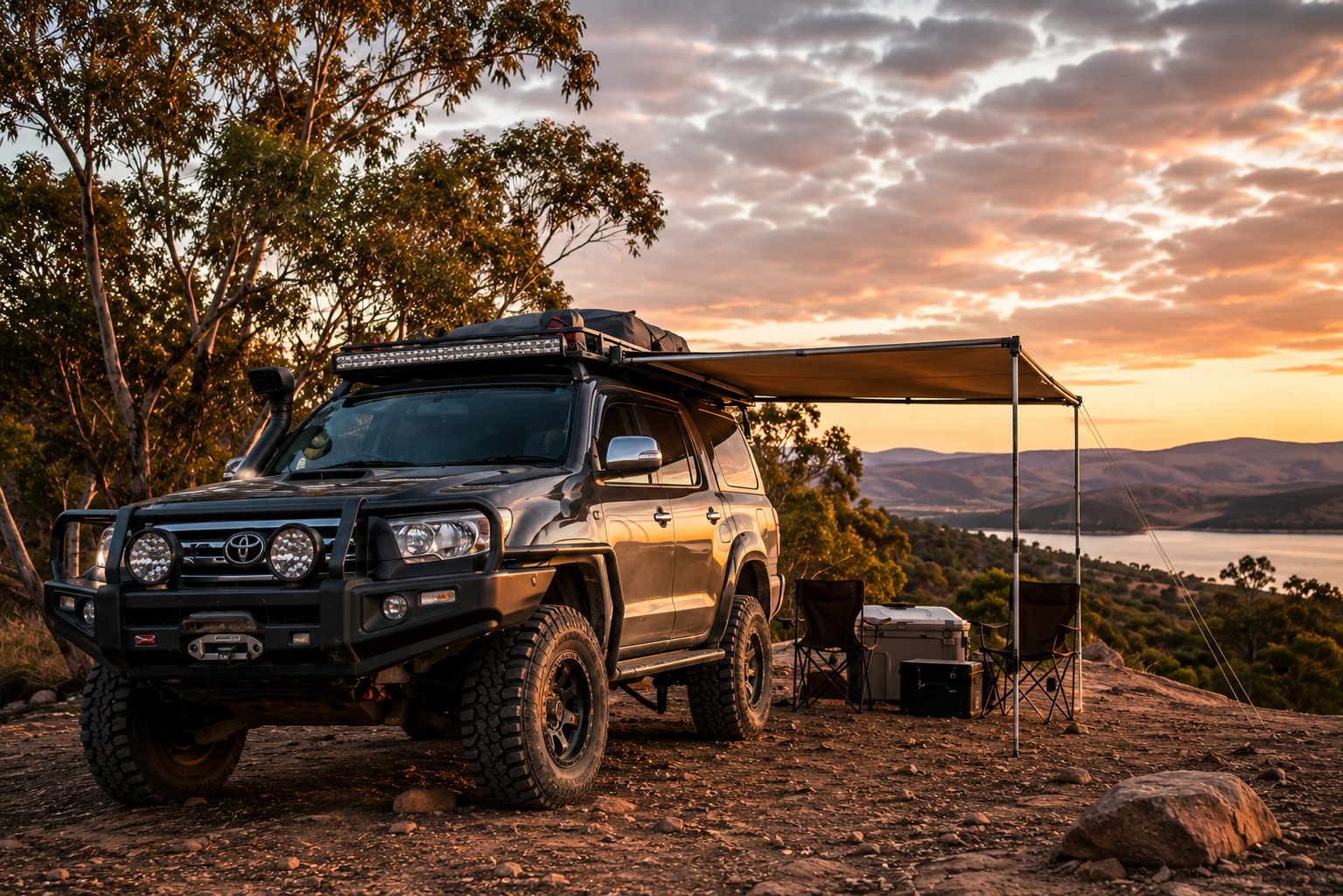
Australia offers some of the most spectacular driving and camping destinations in the world. From coastal tracks and forest trails to remote outback roads, a properly prepared 4WD can turn a long-distance journey into an unforgettable adventure.
However, travelling away from major towns requires more than simply having a four-wheel-drive vehicle. Your vehicle needs to be prepared for changing terrain, additional weight, long distances, dust, corrugations, heat and unexpected conditions.
A good 4WD touring setup is about creating a balanced vehicle that is reliable, comfortable and capable without adding unnecessary modifications.
Start With Your Travel Plans
Before buying upgrades, think about where and how you intend to use your vehicle.
A 4WD used for weekend camping does not necessarily need the same setup as one travelling through remote Australia for several weeks. Consider the terrain, trip length, number of passengers, towing requirements and amount of equipment you will carry.
Your setup may need to accommodate:
- Camping equipment
- Recovery gear
- Additional fuel
- Water storage
- Food and cooking equipment
- Spare parts and tools
- Communication equipment
- Roof-mounted equipment
- Fridges and electrical accessories
Understanding your requirements first makes it easier to choose upgrades that actually benefit your vehicle.
Suspension Should Be a Priority
Adding touring equipment can dramatically increase the weight of a 4WD. Bull bars, winches, drawers, roof racks, canopies, spare tyres and camping equipment all contribute to the vehicle’s overall load.
Factory suspension may not be designed around this permanent additional weight.
A correctly selected suspension upgrade can help improve ride control, load support, ground clearance and overall handling. The important point is that suspension should be selected according to the vehicle’s actual weight and intended use rather than simply choosing the biggest lift available.
Platinum Suspension provides suspension solutions designed around different 4WD applications, including touring, towing and off-road use. Their existing suspension guidance also highlights the importance of matching components to vehicle weight, accessories and driving conditions.
Choose Tyres for the Terrain
Tyres are one of the most important contact points between your vehicle and the ground.
The ideal tyre depends on how much time you spend on sealed roads compared with dirt tracks, sand, mud, rocks and corrugated roads.
For touring, durability and reliability should be considered alongside off-road traction. Carrying a properly inflated spare tyre is equally important because remote roads can leave you many kilometres from assistance.
It is also worth learning how tyre pressures affect performance on different surfaces and carrying equipment that allows you to adjust pressures when conditions change.
Don’t Ignore Recovery Equipment
Even experienced drivers can become stuck.
Mud, soft sand, steep terrain and unexpected weather can turn a straightforward track into a difficult situation. A touring vehicle should therefore carry appropriate recovery equipment and, more importantly, the driver should know how to use it correctly.
Depending on your vehicle and travel plans, recovery equipment may include:
- Rated recovery points
- Recovery straps
- Shackles
- Air compressor
- Tyre deflator
- Traction boards
- Shovel
- Winch equipment
- Gloves and basic tools
Recovery gear should be selected carefully and used according to the manufacturer’s instructions.
Protect the Engine From Dust and Water
Remote Australian roads can expose your vehicle to enormous amounts of dust. Water crossings create another potential challenge.
A snorkel can raise the engine air intake and help reduce the risk associated with low-level air intake locations during suitable off-road conditions. It can also provide access to cleaner air in dusty environments when correctly installed and maintained.
Platinum Suspension manufactures and supplies stainless snorkels and custom airbox solutions for several 4WD applications. Its website highlights these systems for improving airflow and providing additional protection in demanding Australian environments.
A snorkel is not, however, a guarantee that a vehicle can safely cross any depth of water. Water crossings should always be assessed carefully.
Consider Airflow and Exhaust Upgrades
A touring vehicle needs dependable engine performance, particularly when carrying additional weight or travelling long distances.
Air intake and exhaust components can form part of a broader performance strategy. Improving airflow may help the engine operate more efficiently when the appropriate components are selected for the specific vehicle.
For example, Platinum Suspension offers custom snorkels, airboxes, hotpipes, throttle-body pipes and exhaust systems for selected 4WD models.
Rather than modifying everything at once, consider which upgrades address an actual requirement in your vehicle.
Make Weight Management Part of the Build
One of the easiest mistakes in 4WD touring is continuously adding equipment without considering the total weight.
A roof rack, awning, rooftop tent, drawers, fridge, water tanks, recovery equipment and camping accessories can quickly add up.
Extra weight affects suspension, braking, fuel consumption, handling and tyre loads.
Before a major trip, consider weighing the fully loaded vehicle. Knowing your actual weights gives you a much better understanding of whether your current setup is appropriate.
Build Reliability Before Chasing Performance
A remote touring vehicle should prioritise reliability.
There is little value in adding performance modifications if basic maintenance has been neglected. Before heading into remote areas, inspect fluids, belts, hoses, tyres, brakes, suspension components and battery condition.
It is also sensible to carry basic tools and vehicle-specific spare parts that you are capable of replacing.
A pre-trip inspection can identify small problems before they become major issues hundreds of kilometres from the nearest workshop.
Plan for Communication and Navigation
Navigation should not rely entirely on a mobile phone.
Remote areas can have limited or no mobile coverage, so travellers should consider appropriate offline maps, GPS equipment, paper maps and communication devices suited to their destination.
Before leaving, share your itinerary with someone you trust and understand the conditions and access requirements of the areas you plan to visit.
Keep the Setup Practical
A great 4WD is not necessarily the one with the most accessories.
Every modification should have a purpose.
Ask yourself:
- Does this upgrade improve reliability?
- Does it solve a genuine problem?
- Does it add unnecessary weight?
- Is it appropriate for my driving conditions?
- Can the vehicle still be comfortably driven every day?
- Does it work with my existing modifications?
This approach helps create a vehicle that is capable without becoming unnecessarily complicated.
Why Professional Fitment Matters
Suspension, steering and other mechanical modifications can affect how a vehicle behaves on the road. Incorrect component selection or installation can create handling problems and premature wear.
Professional assessment can help ensure that suspension components, vehicle weight, accessories and intended use are considered together.
For owners building a serious touring vehicle, this is particularly valuable because a setup designed for one application may not be suitable for another.
Prepare the Vehicle, Then Prepare Yourself
Vehicle preparation is only part of successful remote touring.
Drivers should also understand how to operate their 4WD on different surfaces, manage tyre pressures, approach difficult terrain, recover a vehicle safely and respond to changing weather conditions.
The best touring setup combines a capable vehicle with sensible driving, proper planning and good preparation.
Final Thoughts
Preparing a 4WD for remote Australian adventures is about much more than installing a lift kit or adding accessories. The strongest touring builds are carefully planned around the vehicle, its load and the places it will travel.
Suspension, tyres, recovery equipment, engine protection, airflow, weight management, maintenance and communication all contribute to a dependable 4WD touring setup.
For Australian drivers looking to upgrade their vehicle for touring, camping or off-road adventures, Platinum Suspension offers suspension and fabrication solutions designed with demanding Australian conditions in mind.
Build your 4WD around your real requirements, focus on reliability and make every modification serve a purpose. That approach can give you a vehicle that is ready not only for the next weekend away, but for the long roads and remote tracks that make Australian touring so rewarding.