
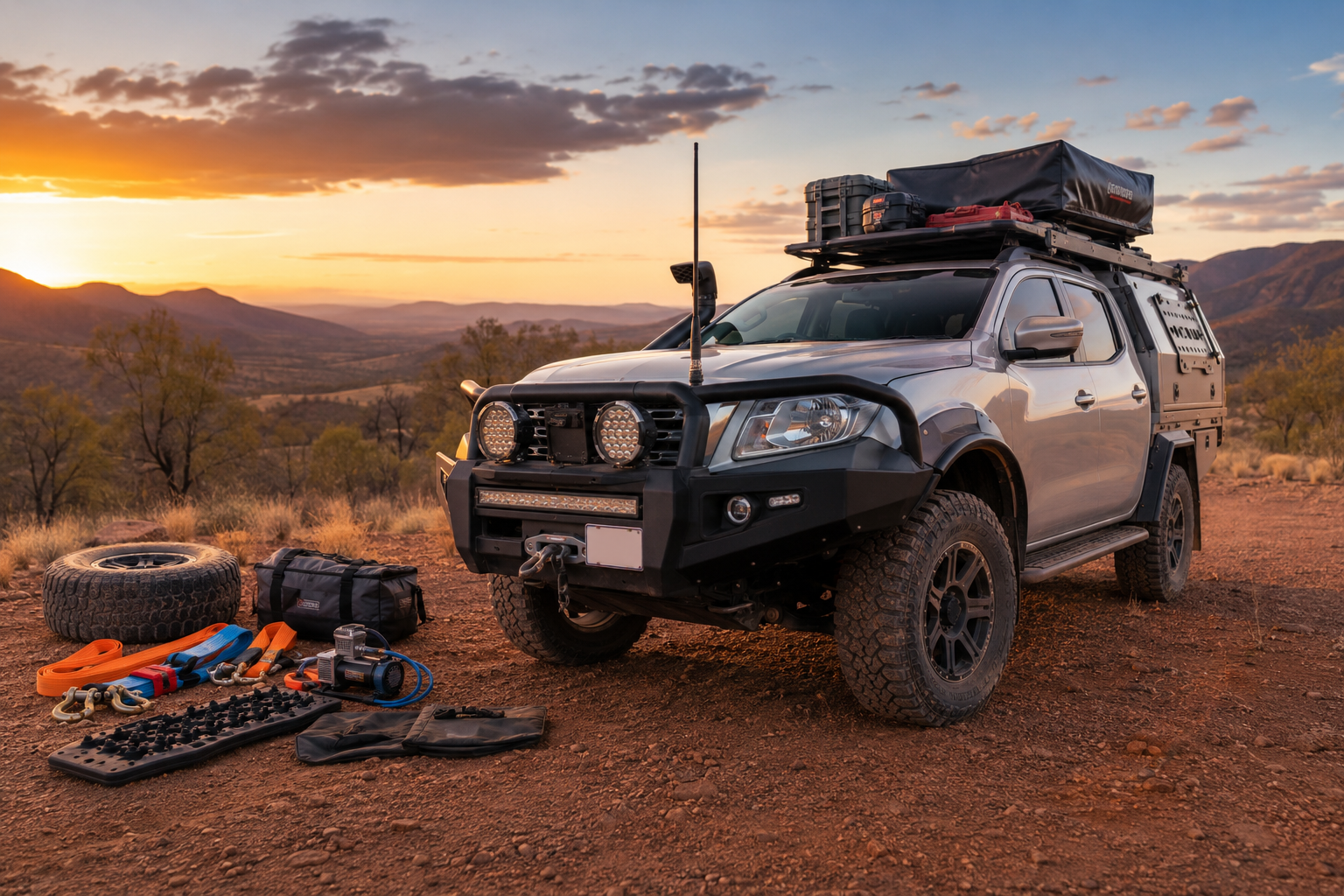
Australia offers some of the world’s most rewarding 4WD touring opportunities. From remote outback tracks and gravel roads to coastal routes and rugged regional highways, a properly prepared four-wheel drive can take you places that ordinary passenger vehicles cannot.
However, preparing a 4WD for long-distance touring involves much more than fitting larger tyres or installing a suspension lift.
A touring vehicle needs to cope with additional weight, changing road conditions, long highway distances, dust, heat, corrugations, towing demands and extended periods away from major towns. Every modification should therefore have a practical purpose and work effectively with the rest of the vehicle.
At Platinum Suspension, the focus is on helping Australian 4WD owners improve their vehicles with carefully selected suspension, airflow, exhaust and performance solutions suited to different driving requirements.
This guide explains the key areas to consider when building a dependable 4WD for long-distance touring in Australia.
Start With Your Touring Requirements
Before purchasing aftermarket components, think about how you will actually use your 4WD.
A vehicle used for occasional weekend camping does not necessarily require the same setup as one travelling through remote Australia for several weeks.
Consider:
- How often will you tour?
- Will you drive mainly on sealed roads?
- Will you regularly use gravel or off-road tracks?
- Will you tow a caravan or camper trailer?
- How much additional weight will you carry?
- Will you travel with several passengers?
- Will you use the 4WD as a daily driver?
- How remote will your destinations be?
Answering these questions first can prevent unnecessary modifications.
The objective is not to create the biggest or most heavily modified 4WD. The objective is to create a dependable vehicle that is appropriate for your actual touring requirements.
Understand the Effect of Added Weight
Weight is one of the most important considerations in any touring build.
A standard vehicle is designed around a particular combination of passengers and equipment. Once you begin adding touring accessories, the overall vehicle weight can increase considerably.
Common additions include:
- Bull bars
- Winches
- Roof racks
- Roof tents
- Canopies
- Storage drawers
- Fridges
- Recovery equipment
- Long-range fuel tanks
- Water tanks
- Camping equipment
- Spare tyres
- Auxiliary batteries
- Recovery boards
Each individual item may not seem particularly heavy, but the combined weight can have a major effect on the vehicle.
Additional weight changes how the suspension performs, particularly when travelling over rough terrain or carrying passengers and equipment.
For this reason, suspension should be considered as part of the complete touring build rather than as an isolated upgrade.
Suspension Is the Foundation of a Touring Build
A touring vehicle can spend long periods carrying substantially more weight than a standard daily driver.
When accessories and equipment are permanently installed, factory suspension may no longer provide the ideal ride height, load support or handling characteristics for the vehicle’s new configuration.
A properly matched suspension system can help maintain suitable ride height and vehicle balance while supporting additional touring equipment.
The correct suspension setup depends on factors such as:
- Constant vehicle weight
- Towing requirements
- Passenger load
- Cargo weight
- Desired ride height
- Road conditions
- Off-road use
Platinum Suspension provides suspension solutions designed around different 4WD requirements, including heavy-duty and long-travel options for selected vehicle platforms.
Rather than simply choosing the highest suspension lift available, touring owners should select a setup according to their vehicle’s actual weight and intended use.
Why Suspension Setup Matters When Towing
Many Australian touring vehicles tow caravans, camper trailers or other equipment.
Towing adds additional demands to the vehicle, particularly around the rear suspension.
If the setup is not matched to the vehicle’s load, excessive rear sag can occur. This can change the vehicle’s stance and potentially affect handling.
A correctly selected suspension system can help maintain better balance when additional weight is carried.
However, suspension is only one part of a towing setup.
Trailer weight, ball weight, tyre pressures, braking systems, load distribution and towing equipment also need to be considered.
A safe towing configuration should always be treated as a complete system.
Airflow Becomes Important in Dusty Conditions
Long-distance Australian touring can expose your vehicle to significant amounts of dust.
Gravel roads, remote tracks and travelling in convoys can create dusty conditions that place additional demands on the engine’s air intake system.
A snorkel can provide a higher air intake position and can be particularly useful for vehicles regularly operated in dusty or off-road environments.
However, a snorkel should not be treated simply as an exterior styling accessory.
Its effectiveness depends on appropriate installation and proper connection to the vehicle’s intake system.
Platinum Suspension specialises in stainless steel snorkels and custom airbox solutions for a range of 4WD platforms, providing options for owners who want to improve their vehicle’s intake setup while maintaining a practical touring configuration.
Custom Airboxes and Engine Airflow
The airbox is another important part of the intake system.
A properly designed airbox helps control the path of air entering the engine while helping protect the intake system from unwanted contaminants.
For vehicles regularly travelling through dusty Australian environments, maintaining effective and clean airflow is an important part of ongoing vehicle maintenance.
Custom airbox designs can also be developed around particular snorkel and engine configurations.
Platinum Suspension offers custom airbox solutions for selected 4WD applications, including Toyota LandCruiser and Ford Ranger platforms.
This demonstrates why compatibility matters when modifying a touring vehicle.
Instead of selecting individual components without considering how they work together, owners should look at the complete intake system.
Choosing the Right Exhaust Setup
The exhaust system can also form part of a performance-focused touring build.
A well-designed exhaust system can contribute to airflow characteristics, durability and overall engine performance, depending on the vehicle and engine configuration.
For diesel 4WDs, exhaust upgrades are often considered alongside intake and intercooler modifications as part of a broader performance strategy.
However, exhaust modifications should always be selected according to the specific vehicle, intended application and applicable Australian regulations.
Platinum Suspension fabricates stainless steel exhaust systems for selected 4WD applications, including vehicles such as the Nissan Navara and Mazda BT-50.
For touring vehicles, durability is especially important because the exhaust system may be exposed to vibration, heat, dust and rough terrain.
Protect the Vehicle From the Environment
Australian touring can expose vehicles to conditions that ordinary city driving rarely presents.
Depending on the route, a 4WD may encounter:
- Dust
- Mud
- Sand
- Rocks
- Corrugations
- Water crossings
- Extreme heat
- Long remote stretches
This means environmental protection should be part of the vehicle preparation process.
Underbody protection, suitable recovery equipment, reliable electrical systems and appropriate tyres can all contribute to a better-prepared touring vehicle.
The equipment required will depend heavily on the destination.
A vehicle travelling primarily between Australian cities will have very different requirements from one heading deep into remote outback country.
Don’t Ignore Tyres and Wheel Setup
Suspension and tyres need to work together.
Installing a suspension system without considering tyre size, wheel configuration and vehicle weight can result in an incomplete setup.
Touring tyres may need to cope with several surfaces, including bitumen, gravel, sand and rocky tracks.
When selecting tyres, consider:
- Typical road surfaces
- Vehicle weight
- Towing requirements
- Expected mileage
- Noise levels
- Wet-weather performance
- Off-road requirements
There is rarely one tyre that is perfect for every possible condition.
The right choice should reflect where and how you actually intend to drive.
Recovery Equipment Is Essential for Remote Travel
A touring 4WD should be prepared for situations where it cannot simply continue driving.
Useful recovery equipment can include:
- Rated recovery points
- Recovery straps
- Rated shackles
- Recovery boards
- Winch
- Air compressor
- Tyre repair equipment
- Appropriate jack
- Portable tools
It is equally important to understand how recovery equipment should be used before travelling into remote areas.
Carrying recovery equipment without knowing how to use it can create a false sense of security.
Training, planning and preparation are just as important as the equipment itself.
Electrical Preparation for Touring
Modern touring vehicles often carry substantial electrical equipment.
Fridges, lights, communication devices, cameras, charging equipment and other accessories can increase electrical demand.
A touring setup may therefore require careful consideration of:
- Auxiliary batteries
- Battery management
- Solar charging
- Wiring
- Fuses
- Charging capacity
- Power distribution
Electrical modifications should be installed correctly, particularly if the vehicle will be travelling far from professional repair facilities.
A small electrical problem in a city can become a much bigger issue when you are hundreds of kilometres from the nearest workshop.
Storage and Weight Distribution
Touring equipment needs to be stored securely and logically.
Drawers, roof racks, canopies and cargo systems can make equipment easier to organise, but they also add weight.
Where possible, heavy equipment should be positioned carefully to maintain balanced vehicle loading.
Avoid placing unnecessary weight high on the vehicle.
A higher centre of gravity can influence handling, particularly on uneven terrain.
Good storage is therefore about more than convenience. It is also an important part of vehicle balance and touring preparation.
Prepare for Long Highway Distances
Off-road capability is important, but Australian touring often involves substantial highway travel before reaching the destination.
A touring vehicle should therefore remain comfortable and stable on sealed roads.
This is another reason why simply installing the largest possible suspension lift is not always the best solution.
A well-rounded touring vehicle should provide a sensible balance between:
- Highway comfort
- Stability
- Load support
- Off-road capability
- Ground clearance
- Tyre performance
- Fuel consumption
A balanced build is usually more practical than an extreme setup that compromises everyday driving.
Consider Future Modifications
Your first modification may not be your last.
Many 4WD owners gradually build their touring vehicles over several years.
A vehicle might initially receive suspension and tyres before later receiving a canopy, roof rack, winch, drawers, additional fuel capacity and camping equipment.
If you expect to add equipment in the future, consider those changes before choosing suspension.
Adding significant weight later can change the requirements of the suspension system.
Planning ahead can help prevent the need to replace components unnecessarily.
Professional Fitment Makes a Difference
A quality component can only perform properly when it is correctly matched and installed.
Suspension systems, snorkels, airboxes, exhausts and other vehicle modifications need to be compatible with the vehicle’s exact model and configuration.
Professional installation can help identify compatibility issues and ensure components are fitted correctly.
Platinum Suspension combines 4WD suspension, fabrication and performance expertise to provide solutions for Australian 4WD owners. Its services and products cover areas including suspension, stainless steel snorkels, custom airboxes and exhaust systems.
Working with a specialist can make it easier to consider how different modifications will interact instead of treating each upgrade as a completely separate project.
Build for Reliability, Not Just Appearance
A touring 4WD can look impressive with large tyres, a tall suspension lift and numerous accessories.
But appearance should never be the primary goal.
When travelling remotely, reliability matters far more.
Every modification should have a purpose.
Ask yourself:
Does this upgrade make the vehicle more capable, reliable, comfortable or suitable for the journey?
If the answer is no, the modification may not be necessary.
A reliable touring vehicle is one where the modifications work together rather than simply being a collection of aftermarket accessories.
A Practical Touring Build Checklist
Before starting a long-distance journey, inspect the complete vehicle.
Mechanical
Check:
- Engine fluids
- Cooling system
- Belts and hoses
- Battery
- Brakes
- Suspension
- Steering
- Wheel bearings
- Tyres
Touring Equipment
Check:
- Recovery equipment
- Spare tyre
- Tyre repair kit
- Compressor
- Jack
- Tools
- Communication equipment
- Navigation
- Lighting
Vehicle Load
Check:
- Total vehicle weight
- Roof load
- Trailer load
- Water
- Fuel
- Camping equipment
- Recovery equipment
Emergency Preparation
Plan:
- Route
- Fuel stops
- Communication options
- Emergency contacts
- Weather conditions
- Alternative routes
Good preparation can make the difference between an enjoyable adventure and an unnecessary roadside problem.
Why Australian Conditions Require a Different Approach
Australia’s enormous size and environmental diversity mean that a vehicle can encounter dramatically different conditions during a single journey.
A driver might leave a major city on sealed roads, transition onto gravel, encounter corrugated tracks and eventually travel through sand, mud or rocky terrain.
This variety is why a 4WD touring setup needs to be versatile.
Components should be selected according to the conditions the vehicle is realistically expected to face.
The objective is not to build a vehicle capable of handling every imaginable situation. Instead, build a vehicle that performs reliably in the environments you actually plan to explore.
Platinum Suspension for Australian 4WD Touring
Platinum Suspension is focused on 4WD suspension, fabrication and performance solutions for Australian vehicles.
Its range includes suspension systems, stainless steel snorkels, custom airboxes, exhaust systems, intercoolers, throttle and hard-pipe upgrades and other 4WD performance components.
The company supports a range of popular 4WD platforms and provides solutions designed around different vehicle applications.
For touring enthusiasts, working with a specialist such as Platinum Suspension can make it easier to develop a complete vehicle setup rather than purchasing unrelated modifications individually.
Whether the goal is improved load support, better airflow, a durable exhaust system or a more capable touring configuration, each upgrade should be selected around the vehicle’s intended purpose.
Conclusion
Building a reliable 4WD for long-distance touring in Australia is ultimately about creating a vehicle that matches the journey.
Suspension needs to account for additional weight. Intake systems need to suit dusty environments. Exhaust and performance components should complement the vehicle’s engine configuration. Tyres need to match the terrain, while recovery equipment, electrical systems and storage need to support the realities of extended travel.
Most importantly, every modification should contribute to reliability, practicality and vehicle performance.
Platinum Suspension understands that a successful touring build is more than a collection of aftermarket parts. It is a complete vehicle setup where suspension, airflow, exhaust, weight, tyres and accessories work together.
A well-planned 4WD does not need to be the biggest or most aggressively modified vehicle on the road. It needs to be dependable, balanced and properly prepared for the conditions it will encounter.
With the right upgrades and professional approach, Australian 4WD owners can build a vehicle capable of handling everything from weekend camping trips to serious long-distance adventures across the country.