
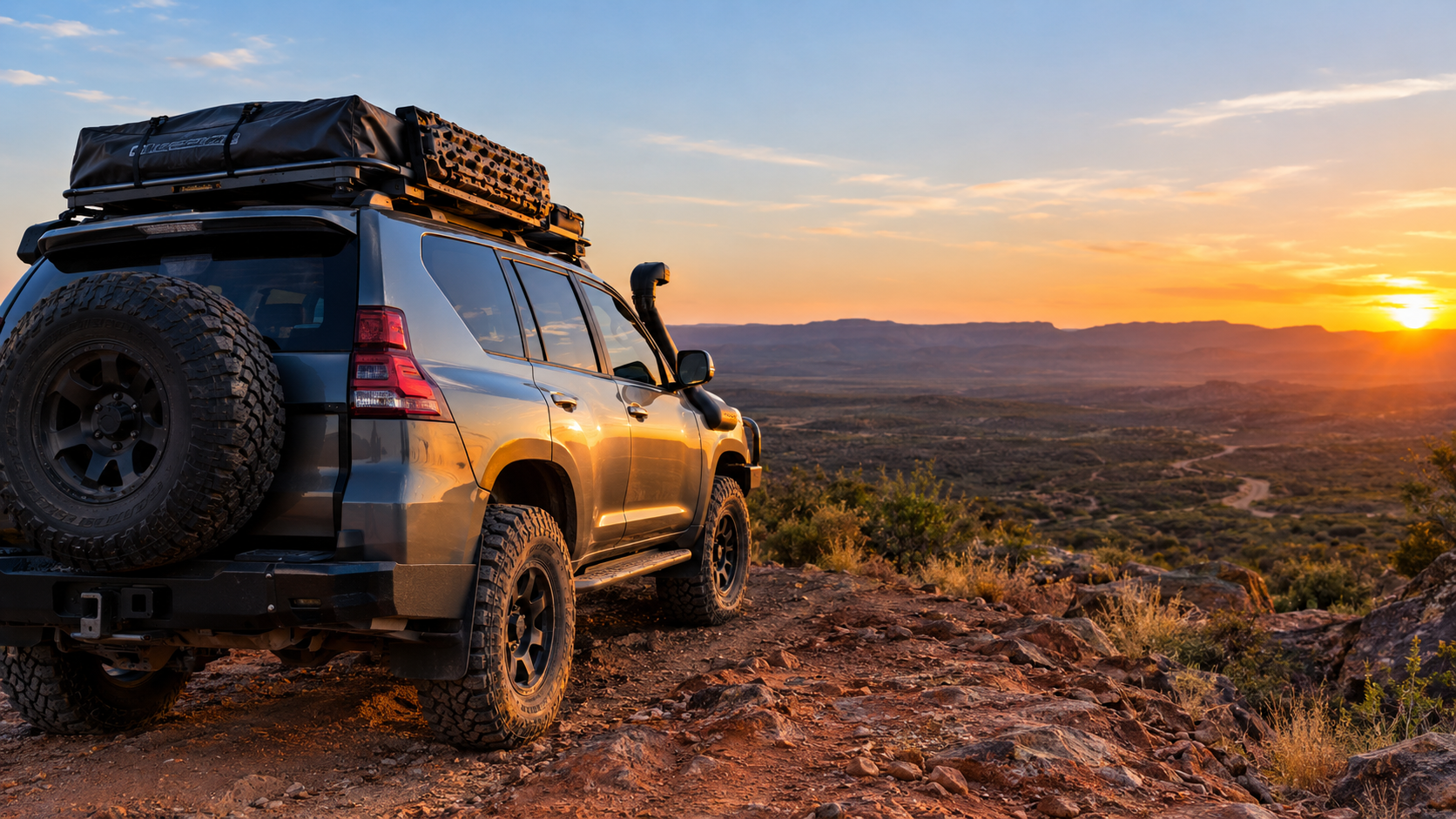
A practical guide to suspension, vehicle setup, load management and long-distance off-road comfort

Australia offers some of the most rewarding four-wheel-drive touring experiences in the world. From remote desert tracks and rugged mountain passes to coastal beaches and long stretches of corrugated outback roads, every journey presents a different challenge for your vehicle. For many 4WD owners, preparing for a major touring adventure involves more than packing camping equipment, checking tyre pressure or installing a roof rack. The way a vehicle carries weight, responds to uneven terrain and maintains stability over long distances can significantly affect the overall driving experience. A well-prepared 4WD should be capable of handling its intended load while delivering dependable performance on highways, gravel roads and challenging tracks. Suspension plays an important role in achieving this balance, particularly when a vehicle is equipped with touring accessories or regularly used for extended off-road travel. Whether you drive a Toyota LandCruiser, Hilux, Ford Ranger, Nissan Patrol or another popular four-wheel drive, understanding how to prepare your vehicle can help you make more informed decisions before heading into the Australian outdoors. This guide explores the key considerations involved in preparing a 4WD for long-distance touring, with a focus on suspension setup, vehicle weight, handling, maintenance and practical trip preparation.
1. Understand Your Vehicle’s Touring Requirements
Before modifying your 4WD, consider how you actually intend to use it. A vehicle built for occasional weekend camping may have very different requirements from one used for extended remote-area travel. For example, a family touring vehicle may carry passengers, a fridge, camping equipment, water storage and recovery gear. A work ute that doubles as a touring vehicle may also carry tools, a canopy, a bull bar and additional fuel. Each accessory adds weight, and that weight changes how the vehicle behaves. Start by identifying your typical touring conditions:
- Will you primarily drive on sealed highways or unsealed roads?
- Will you regularly tow a caravan or camper trailer?
- How much equipment will remain in the vehicle permanently?
- Will you travel through corrugated, rocky, sandy or muddy terrain?
- How frequently will the vehicle be used for fully loaded touring? These questions help establish what your vehicle needs from its suspension and supporting components. A suitable setup should reflect your real driving conditions rather than a theoretical off-road build. Choosing components based on actual usage can help avoid unnecessary modifications and improve overall vehicle practicality.
2. Why Suspension Matters for Long-Distance Touring
Suspension is responsible for helping the tyres maintain contact with the road while managing movement between the wheels and the vehicle body. It also influences ride comfort, stability and the way a 4WD responds to uneven surfaces. During a long touring trip, suspension components may encounter thousands of bumps, dips and repeated impacts. Corrugated roads can place sustained demands on shock absorbers, while heavy loads can increase spring compression and alter ride height. When suspension is poorly matched to the vehicle’s weight and intended use, drivers may notice excessive bouncing, rear-end sagging, reduced comfort or less predictable handling. A properly selected suspension system can help maintain suitable ride height under the intended load and provide controlled suspension movement across changing terrain. However, suspension upgrades should not be viewed as a guarantee against every off-road challenge. Tyre condition, vehicle speed, driving technique, load distribution and regular maintenance remain important parts of responsible touring.
3. Match Your Suspension to Your Touring Load
One of the most important steps in preparing a touring 4WD is understanding how much weight it carries. Many vehicles leave the dealership with standard suspension designed around the manufacturer’s specified operating conditions. Once accessories and touring equipment are added, the vehicle’s actual weight distribution may change considerably. A bull bar and winch can increase front axle load, while rear drawers, a fridge, a canopy and a water tank can place additional weight over the rear axle. This is why suspension selection should consider both the amount of weight added and where that weight is positioned.
Constant Loads and Variable Loads
Constant loads are accessories that remain fitted to the vehicle most of the time. Examples include permanent canopies, bull bars, drawer systems and auxiliary batteries. Variable loads are items added for particular journeys, such as camping equipment, luggage, food, water and recovery supplies. The distinction matters because springs need to suit the vehicle’s regular operating weight, while the complete setup must also remain appropriate when additional touring equipment and passengers are added. A spring rate that is too soft for a permanent load may allow excessive sag. A setup that is unnecessarily stiff for the vehicle’s normal use may compromise comfort when travelling without that load. For this reason, discuss your vehicle’s actual weight and intended touring configuration with a suspension specialist before choosing components.
4. Choose Shock Absorbers for the Terrain You Drive
Shock absorbers help control spring movement and keep the vehicle’s suspension from continuing to bounce after encountering an uneven surface. During long stretches of corrugated road, shock absorbers repeatedly convert movement into heat. The demands placed on them depend on road conditions, vehicle speed, load and suspension design. Different shock absorber designs offer different characteristics, and the right choice depends on your vehicle and how you use it. For example, a touring vehicle that spends substantial time on rough unsealed roads may have different damping requirements from a daily-driven 4WD that occasionally visits a gravel track. When considering shock absorbers, think about:
- The vehicle’s loaded weight
- Typical road conditions
- Frequency of extended off-road driving
- Towing requirements
- Desired ride comfort and handling
- Compatibility with the selected springs and suspension components A complete suspension setup should work as a coordinated system. Selecting shock absorbers based only on appearance, price or lift height may overlook the factors that influence real-world performance.
5. Consider Ride Height, Ground Clearance and Suspension Travel
Ground clearance is often a major consideration for 4WD owners preparing for off-road travel. Additional clearance can help reduce the risk of underbody contact when navigating certain obstacles. However, increasing ride height is not the only way to improve a vehicle’s touring capability. Suspension lift height, tyre diameter, vehicle weight and suspension geometry all influence how a vehicle performs on uneven terrain. A lift that is poorly matched to the vehicle can create additional complications, including changes to steering geometry, driveline angles and suspension component operating ranges. It is also important to distinguish between suspension lift and the vehicle’s total height increase. Larger tyres and roof-mounted accessories can affect overall vehicle dimensions, which may matter when entering car parks, garages, tracks or restricted-access areas. The goal should be a balanced setup that provides the clearance and suspension movement required for your intended travel without introducing unnecessary compromises. Before installing a lift kit, check applicable Australian vehicle modification requirements and confirm that the proposed setup is suitable for your specific vehicle.
6. Prepare Your 4WD for Towing and Touring Together
Many Australian touring vehicles are expected to handle both off-road travel and caravan towing. This combination creates additional suspension and load-management considerations. When a trailer is connected, its tow-ball download contributes to the vehicle’s load. This can affect rear suspension compression, front axle loading and overall vehicle balance. If your 4WD regularly tows a caravan, camper trailer or boat, your suspension should be selected with that use in mind. Consider the following before travelling:
- Check the vehicle’s rated towing capacity and tow-ball download limits.
- Understand how tow-ball download affects payload and axle loads.
- Confirm that passengers, accessories and luggage remain within the vehicle’s limits.
- Inspect the rear suspension for excessive sag or signs of wear.
- Ensure the trailer and vehicle are loaded and maintained correctly.
A suspension upgrade may help support an appropriate load, but it does not automatically increase the vehicle’s legal payload or towing capacity. Always follow the manufacturer’s ratings and applicable regulations. For vehicles carrying substantial touring equipment while towing, a professional assessment can help identify whether the existing suspension remains suitable for the intended setup.
7. Distribute Weight Correctly Across Your 4WD
Suspension performance is closely connected to how weight is distributed throughout the vehicle. Even a well-selected suspension system can be affected by poor load placement. Heavy equipment positioned too far behind the rear axle, for example, can influence vehicle balance and increase the load placed on particular components. Before a long trip, organise your touring equipment with weight distribution in mind. Place heavier items securely and as low as practical, while avoiding unnecessary weight high on the roof. Make sure equipment cannot shift during sudden braking or while travelling over uneven ground. Roof racks, rooftop tents and other elevated accessories can raise the vehicle’s centre of gravity. This can affect body movement and stability, particularly when cornering or driving across uneven surfaces. It is also important to weigh a fully loaded vehicle when possible. Check total vehicle mass and individual axle loads against the manufacturer’s ratings rather than relying solely on estimated accessory weights. Good weight management complements a suitable suspension setup and helps create a more predictable touring vehicle.
8. Inspect Suspension Components Before Leaving
A remote touring trip is not the ideal time to discover that a suspension component is worn, damaged or incorrectly fitted. A pre-trip inspection gives you an opportunity to identify potential problems before they become more disruptive. Pay particular attention to the following components:

Shock absorbers
Check for visible oil leaks, damaged mounts, unusual noises and signs of reduced damping performance.

Coil and leaf springs
Look for visible damage, uneven ride height, excessive sag or other signs of wear.

Bushes and mounting points
Inspect for deterioration, excessive movement, loose fasteners or damaged mounting hardware.

Tyres and wheel alignment
Check tyre condition, pressure, tread wear and alignment, particularly after suspension modifications.
If you notice unusual noises, handling changes or visible damage, have the vehicle inspected by a qualified professional before beginning a demanding trip.
9. Understand the Relationship Between Tyres and Suspension
Tyres and suspension work together to influence how a 4WD responds to different surfaces. Tyres provide the contact between the vehicle and the road, while the suspension helps manage wheel movement and maintain control over uneven terrain. A change in tyre size, construction or pressure can influence ride comfort, handling and ground clearance. Larger tyres may also affect gearing, braking behaviour and clearance within the wheel arches. When planning a suspension upgrade, consider your current tyres and any planned changes. A vehicle fitted with larger off-road tyres may require additional clearance, but the appropriate suspension solution depends on the specific vehicle, tyre dimensions and intended use. Tyre pressure should also be adjusted appropriately for the terrain and load, within suitable manufacturer and tyre guidance. Pressures that work on sealed highways may not be appropriate for every off-road surface. Rather than treating tyres and suspension as separate modifications, consider how the complete setup will work together.
10. Adapt Your Driving to Australian Touring Conditions
Even a well-equipped 4WD needs to be driven according to the conditions. Corrugations, loose gravel, soft sand and rocky tracks each present different challenges. Travelling too quickly over rough surfaces can increase heat and impact loads on suspension components while reducing the driver’s ability to respond to unexpected obstacles. A suitable touring setup should complement sensible driving practices, not replace them. Before tackling unfamiliar terrain, consider road conditions, visibility, vehicle loading and your experience level. Reduce speed when conditions require it, and avoid pushing the vehicle beyond its capabilities. Regular breaks are also useful on long touring days. Fatigue can affect concentration and reaction time, particularly on repetitive roads where the driving environment changes very little. Responsible driving helps protect your vehicle, your passengers and the environment while making the journey more enjoyable.
11. Plan Suspension Maintenance Around Your Touring Schedule
Suspension maintenance should not stop once the vehicle has been upgraded. Long-distance travel, heavy loads and frequent exposure to rough roads can increase wear on suspension components. A maintenance plan can help identify developing problems before they affect your next trip. Before departure, inspect the suspension and arrange any required servicing. After a demanding journey, check for visible damage, unusual noises, loose components or changes in ride height. Keep a record of suspension work, component replacements and inspections. This can make it easier to identify recurring issues and understand how your vehicle responds to different touring conditions. If you frequently travel on corrugated roads or carry heavy loads, ask your suspension specialist how often your specific setup should be inspected. The appropriate maintenance schedule depends on the vehicle, component specifications and operating conditions, so follow the relevant manufacturer’s recommendations.
12. Why a Vehicle-Specific Suspension Setup Makes a Difference
No two touring vehicles are necessarily configured the same way, even when they share the same make and model. One Toyota Hilux might be used as a lightly loaded daily driver, while another carries a canopy, drawers, tools, a long-range fuel tank and camping equipment. Their suspension requirements may be substantially different. The same principle applies to LandCruisers, Ford Rangers, Nissan Patrols and other popular 4WDs. A vehicle-specific suspension assessment considers the model, existing modifications, axle loads, driving conditions and intended use. This helps avoid the common mistake of choosing suspension based solely on lift height or the assumption that a heavy-duty setup will automatically deliver better comfort. For Australian touring, the objective is to find a practical balance between load support, ride quality, suspension control and durability.
13. Common 4WD Touring Preparation Mistakes to Avoid
Even experienced touring enthusiasts can overlook important details when preparing a vehicle for a major trip. Avoiding these common mistakes can help you make better decisions about your next suspension upgrade.
| Common mistake | Why it matters |
|---|---|
| Choosing suspension based only on lift height | Lift height alone does not determine ride quality, load support or suitability. |
| Ignoring added accessory weight | Extra weight can change axle loads, ride height and vehicle handling. |
| Overloading roof racks | Excessive elevated weight can affect stability and may exceed rated limits. |
| Neglecting wheel alignment | Incorrect alignment can contribute to uneven tyre wear and handling issues. |
| Skipping pre-trip inspections | Worn or damaged components may become more problematic during remote travel. |
| Assuming a lift increases payload | Suspension modifications do not automatically change legal vehicle ratings. |
| Driving too quickly on corrugations | High speeds can increase impact loads, heat and the risk of losing control. |
A thoughtful preparation process helps ensure that modifications contribute to the vehicle’s actual touring requirements rather than creating new compromises.
14. Build a Touring Setup That Suits Your Next Adventure
Preparing a 4WD for Australian touring is about creating a vehicle that can handle its intended conditions while remaining comfortable, predictable and practical. Suspension selection is an important part of that process, but it should be considered alongside vehicle weight, tyres, towing requirements, maintenance and driving habits. Whether you’re planning a short camping trip or an extended journey through remote Australia, taking the time to assess your vehicle before departure can help you avoid unnecessary problems and make more informed upgrade decisions. A properly matched suspension system can help support your touring load, improve suspension control and deliver a more composed driving experience across a range of road conditions. The key is to focus on the complete vehicle rather than any single modification.
Conclusion: Get Your 4WD Ready for the Road Ahead
Australia’s diverse touring environments demand careful vehicle preparation. From long highway drives to corrugated outback tracks, the right combination of suspension, load management, tyres and maintenance can make a meaningful difference to your overall driving experience. Before investing in a suspension upgrade, take time to understand your vehicle’s weight, intended use and performance requirements. A setup selected around these factors is more likely to deliver practical benefits than one chosen simply for its appearance or lift height. At Platinum Suspension, finding the right suspension solution starts with understanding your vehicle and how you use it. Whether you’re preparing a 4WD for touring, towing or regular off-road adventures, exploring suitable suspension options can help you take the next step towards a more capable and well-prepared vehicle. Visit Platinum Suspension to explore suspension solutions and prepare your 4WD for the journeys ahead.