
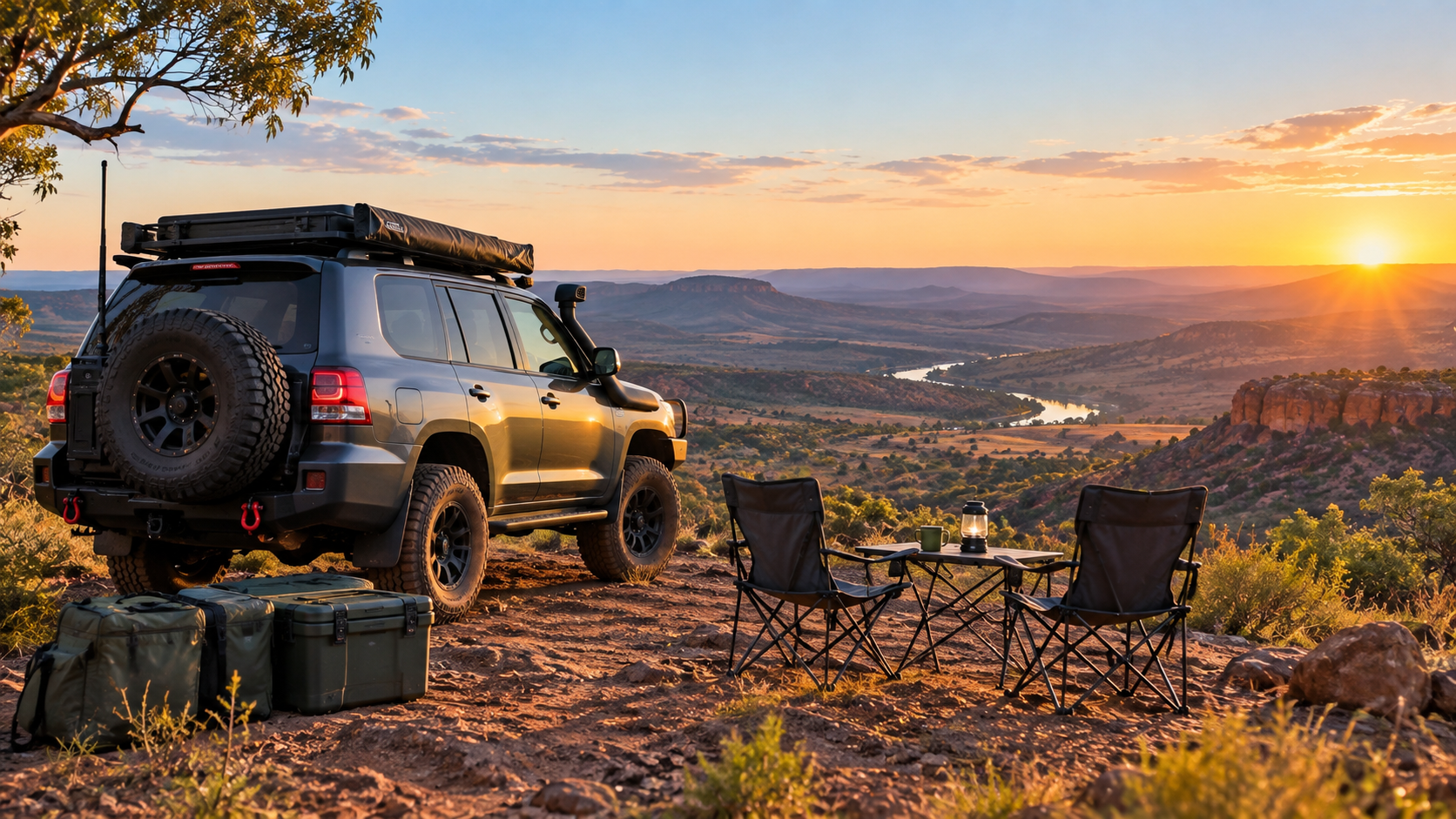
Long-distance 4WD touring across Australia is an experience unlike ordinary road travel. Remote dirt tracks, corrugations, rocky terrain, sand, dust, extreme temperatures and long distances between services can place considerable demands on both the vehicle and driver.
A reliable touring vehicle needs more than a powerful engine. Suspension, tyres, air intake, cooling, recovery equipment, electrical systems and load management all contribute to how confidently a 4WD performs away from sealed roads.
Before heading into the Australian outback, it is worth taking the time to assess your vehicle and make sure every major component is ready for the journey.
Why Proper 4WD Preparation Matters
A vehicle that performs perfectly during everyday city driving may behave very differently when it is carrying camping equipment, recovery gear, extra fuel, passengers and water over thousands of kilometres.
Additional weight changes suspension performance, braking behaviour, steering response and tyre loading. Corrugated roads create continuous vibration, while dust can affect air filtration and engine components.
Remote travel also introduces another important factor: distance.
A minor issue near home can usually be repaired quickly. The same problem hundreds of kilometres from the nearest workshop can become a serious inconvenience.
Proper preparation reduces unnecessary risks and gives your vehicle a better chance of handling the conditions it was built and modified to face.
Start With a Complete Mechanical Inspection
Before adding new accessories, begin with the fundamentals.
A comprehensive inspection should cover the engine, transmission, cooling system, brakes, steering, suspension, driveline and electrical system.
Check for:
- Fluid leaks
- Worn belts and hoses
- Battery condition
- Brake pad and rotor wear
- Wheel bearing condition
- Steering component wear
- Suspension damage
- CV joints and driveshafts
- Differential and transmission fluids
- Cooling system condition
- Tyre condition and pressures
This is particularly important for older vehicles or 4WDs that have already accumulated significant kilometres.
Preventative maintenance is usually far easier and less expensive than repairing a failure in a remote location.
Evaluate Your Vehicle’s Added Weight
One of the most overlooked aspects of touring preparation is vehicle weight.
A touring 4WD can gain considerable additional weight through:
- Bull bars
- Winches
- Roof racks
- Canopies
- Drawers
- Fridges
- Recovery equipment
- Spare tyres
- Water tanks
- Camping equipment
- Long-range fuel tanks
- Auxiliary batteries
All of these additions affect the vehicle.
If your 4WD has gained substantial weight, the original suspension may no longer provide the ride height, control or load support you need.
This is where a properly selected suspension upgrade can make a significant difference.
Choose Suspension Based on How You Travel
There is no single suspension setup that is perfect for every touring vehicle.
A lightly loaded weekend vehicle has different requirements from a fully equipped touring 4WD that spends weeks travelling remote roads.
When selecting suspension, consider your actual permanent and temporary load rather than simply choosing the highest lift available.
A properly matched setup can help improve:
- Load carrying performance
- Ride comfort
- Vehicle control
- Ground clearance
- Suspension travel
- Stability on uneven surfaces
- Performance over corrugations
Platinum Suspension provides suspension solutions designed around different 4WD applications, including heavy-duty and long-travel configurations.
The objective should always be a balanced vehicle rather than simply achieving a particular lift height.
Don’t Ignore the Tyres
Tyres are one of the most important contact points between your vehicle and the terrain.
For long-distance touring, inspect your tyres carefully before departure. Look for uneven wear, cuts, cracks, sidewall damage and insufficient tread.
Your tyre selection should match the environments you expect to encounter.
Depending on the journey, you may encounter:
- Gravel
- Mud
- Sand
- Rocks
- Corrugations
- Bitumen
- Wet tracks
It is also important to understand appropriate tyre pressures for different conditions. Lower pressures can improve traction and ride quality on suitable off-road surfaces, but pressures should always be selected according to the vehicle, tyre manufacturer recommendations and driving conditions.
Carry a reliable tyre pressure gauge and a method of reinflating your tyres when required.
Protect Your Engine From Dust
Australian outback roads can generate enormous amounts of dust, particularly when travelling behind other vehicles.
A quality snorkel can help relocate the engine air intake higher on the vehicle, where the air may be cleaner and less affected by dust and debris close to the road surface.
Platinum Suspension specialises in stainless-steel snorkels and custom airbox solutions for 4WD applications. The company states that its products are designed and fabricated for Australian conditions.
However, a snorkel should not be treated as a complete solution by itself. The entire intake system should be properly sealed and the air filter should be inspected regularly, particularly during dusty trips.
Consider Your Exhaust System
Long-distance touring and towing can place additional demands on a diesel engine.
A suitable exhaust system can improve exhaust gas flow and complement other performance modifications. However, exhaust selection should be based on the vehicle, engine configuration, intended use and applicable Australian regulations.
Platinum Suspension offers DPF-back stainless exhaust systems and other exhaust solutions for selected 4WD applications.
For a touring build, reliability should remain more important than chasing maximum power.
A well-balanced vehicle that performs consistently across long distances is generally more useful than a heavily modified vehicle that has sacrificed drivability or dependability.
Prepare a Reliable Recovery Setup
Every remote touring vehicle should have recovery equipment appropriate for its size, weight and intended terrain.
Depending on your travel plans, equipment may include:
- Rated recovery points
- Recovery straps
- Shackles suitable for the application
- Recovery boards
- Air compressor
- Tyre repair kit
- Shovel
- Rated winch
- Winch accessories
- Traction equipment
Recovery equipment is only useful if you know how to use it safely.
Before your trip, become familiar with your recovery points, winch operation and basic recovery procedures.
Think About Electrical Reliability
Modern touring vehicles can carry significant electrical loads.
Fridges, lights, communication equipment, GPS devices, air compressors and other accessories can place additional demands on the electrical system.
Before travelling remotely, inspect:
- Main battery
- Auxiliary battery
- Battery terminals
- Wiring
- Fuses
- Charging systems
- Accessory connections
Poorly installed accessories can create reliability problems, so electrical modifications should be installed carefully and checked before a major trip.
Protect the Vehicle From Corrugations
Corrugated roads are among the most demanding surfaces encountered during Australian touring.
Constant vibration can affect suspension components, mounting hardware, electrical connections and other vehicle systems.
Driving style matters as well.
Speed should be appropriate for the road conditions, vehicle load and visibility. Regularly inspect the vehicle during long stretches of corrugated road travel rather than waiting until something feels wrong.
After particularly harsh sections, check for loose hardware, tyre damage, fluid leaks and suspension issues.
Manage Your Touring Load
Packing a 4WD is not simply about fitting everything inside.
Weight distribution matters.
Heavy equipment should be positioned carefully rather than concentrated high on the roof or at the very rear of the vehicle.
A high centre of gravity can negatively affect handling, particularly on uneven terrain.
Before leaving, consider:
- What equipment is genuinely necessary?
- Which items are permanently mounted?
- Where is the heaviest equipment located?
- How much water and fuel are being carried?
- Is the vehicle within its legal weight limits?
- Does the suspension match the actual touring load?
Reducing unnecessary weight can improve efficiency, handling and overall vehicle performance.
Don’t Forget Cooling System Maintenance
Australian temperatures can be demanding, particularly when a vehicle is climbing, towing or travelling slowly through difficult terrain.
A cooling system inspection should be part of your pre-trip preparation.
Check coolant levels, hoses, radiator condition, fans and related components. Any sign of overheating should be investigated before heading into remote country.
A vehicle that is already struggling with cooling in normal conditions may have serious problems when heavily loaded and travelling through extreme heat.
Test Your Setup Before the Big Trip
One of the best preparation methods is to test your vehicle before committing to a long remote journey.
Take the vehicle on progressively longer trips.
Load it with the equipment you expect to carry and pay attention to:
- Ride quality
- Steering response
- Braking
- Suspension behaviour
- Tyre performance
- Fuel consumption
- Engine temperatures
- Noise and vibration
- Storage accessibility
A weekend shakedown trip can reveal problems that would otherwise appear much further from home.
Build the Vehicle Around Your Real Touring Needs
The best touring 4WD is not necessarily the vehicle with the most modifications.
It is the vehicle where the modifications work together.
For example, adding significant accessories without considering suspension can create an unbalanced setup. Increasing tyre size may affect clearance, gearing and handling. Adding performance components without considering airflow and supporting systems may produce less benefit than expected.
A professional approach looks at the entire vehicle rather than treating every modification as an isolated upgrade.
When Should You Upgrade Your Suspension?
If your vehicle regularly carries additional weight, experiences rear-end sagging, feels unstable under load, bottoms out on rough roads or struggles to maintain controlled handling, it may be time to assess the suspension.
Other warning signs include:
- Excessive bouncing
- Poor cornering stability
- Uneven tyre wear
- Clunking or unusual suspension noises
- Reduced ride height
- Poor towing stability
- Suspension bottoming
These symptoms should be inspected by a qualified professional before deciding which components to replace or upgrade.
Prepare for the Journey, Not Just the Destination
Successful outback touring is about preparation.
Your 4WD needs to be capable of handling the road, but it also needs to remain reliable throughout the entire trip.
That means looking beyond appearance and focusing on practical improvements such as suitable suspension, quality tyres, engine protection, recovery equipment, cooling system maintenance and sensible load management.
Platinum Suspension works with Australian 4WD owners on suspension, snorkels, custom airboxes, exhausts and other performance-related upgrades from its Molendinar workshop on the Gold Coast.
Whether you’re planning a weekend adventure or a multi-week journey through remote Australia, preparing your vehicle properly can make the difference between simply travelling and genuinely enjoying the drive.
Final Thoughts
Long-distance 4WD touring demands more from a vehicle than normal daily driving. Extra weight, rough roads, dust, heat and remote conditions all require careful preparation.
Start with a complete mechanical inspection, understand your vehicle’s loaded weight, choose suspension for your actual requirements and make sure your tyres, recovery equipment, cooling system and electrical setup are ready for the journey.
Most importantly, test your setup before travelling deep into remote country.
A properly prepared 4WD gives you greater confidence, better control and a much stronger foundation for exploring Australia’s incredible outback.
For suspension, snorkel, exhaust and 4WD upgrade solutions, Platinum Suspension can help you build a setup suited to your vehicle and the way you intend to travel.