
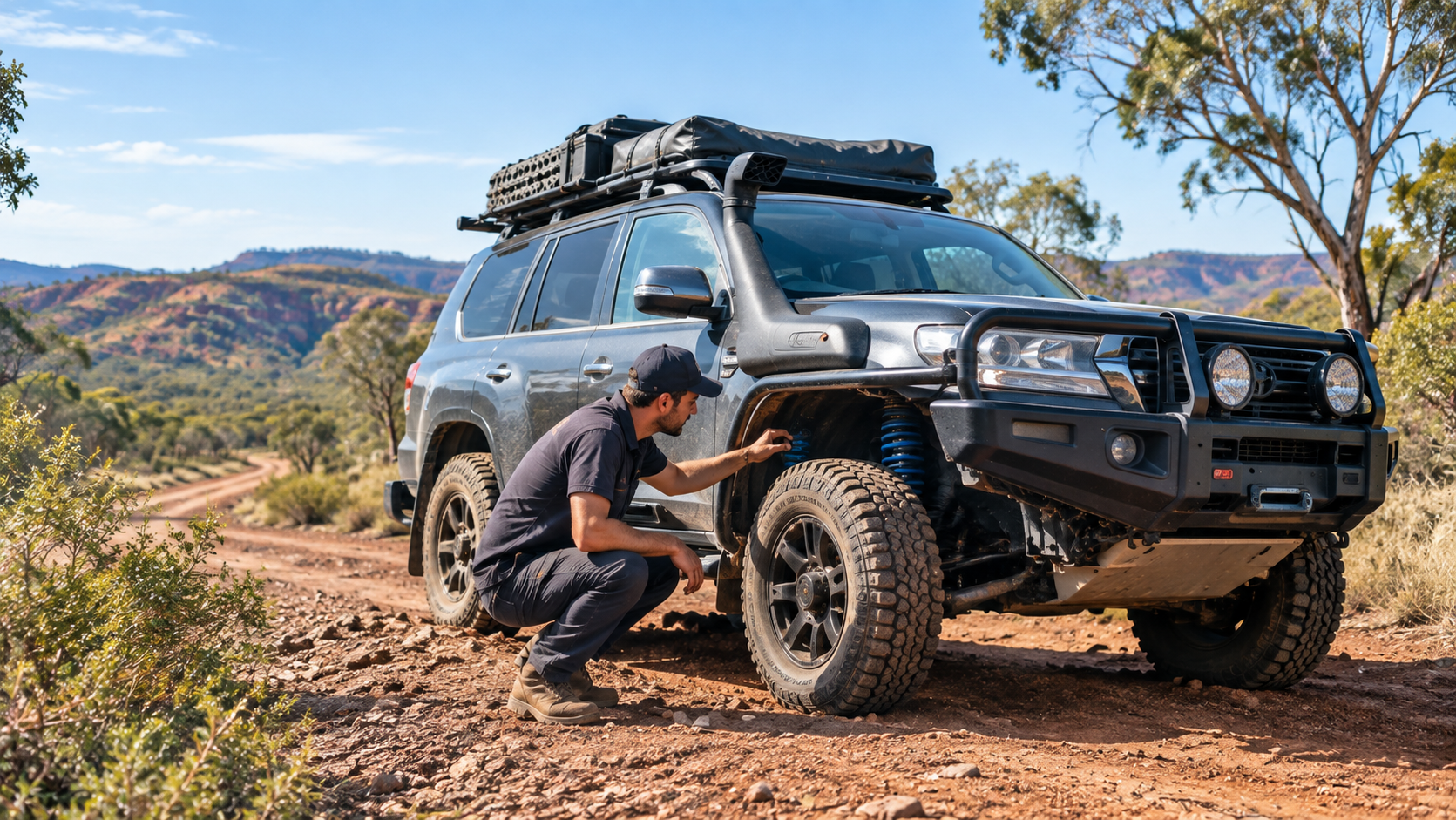
Long-distance 4WD touring across Australia is very different from everyday city driving. A vehicle that feels comfortable on sealed roads can behave very differently once it is loaded with camping equipment, recovery gear, additional fuel, water, passengers and accessories.
Long corrugations, gravel roads, rocky tracks, sand, heat and thousands of kilometres can place considerable demands on a vehicle. That is why a good 4WD touring setup in Australia should be planned around how the vehicle will actually be used rather than simply adding as many accessories as possible.
At Platinum Mechanical & Suspension on the Gold Coast, 4WD owners can access suspension, snorkels, custom airboxes, exhaust systems and other performance upgrades designed around Australian driving conditions. The workshop also specialises in Nissan Navara D23 NP300 upgrades and custom fabrication.
Why Your Touring Setup Matters
A touring vehicle gradually becomes heavier as accessories are added.=
A bull bar, winch, roof rack, awning, drawers, fridge, spare wheel, recovery equipment, long-range fuel tank and camping equipment can all contribute to additional weight. Passengers and luggage add even more.
The important point is that these modifications work together.
Adding weight without considering the suspension can affect ride height, handling and suspension performance. Increasing tyre size can change vehicle dynamics. A snorkel and airbox may improve intake protection and airflow, while an exhaust upgrade can form part of a broader performance strategy.
A successful touring build therefore needs to be treated as a complete vehicle system.
Start With Your Vehicle’s Real Weight
Before choosing suspension, think about what your vehicle actually carries.
The weight of a touring vehicle can be divided into several categories:
- Factory vehicle weight
- Passengers
- Permanent accessories
- Camping equipment
- Recovery equipment
- Fuel
- Water
- Food and supplies
- Tools and spare parts
Some accessories remain on the vehicle permanently, while others are only carried during trips.
This distinction matters because suspension should be selected according to the vehicle’s intended load rather than simply choosing a lift height.
Platinum Suspension’s suspension products can be configured around the constant weight carried by the vehicle. For example, its D23 Navara long-travel suspension products request information about existing constant weight to help avoid height inconsistencies.
Choose Suspension Around the Way You Travel
Suspension is one of the most important components of a touring vehicle.
However, the best setup for a work ute may not be the best setup for a family touring vehicle. Likewise, a vehicle designed for serious off-road driving may require a different configuration from one that spends most of its time on highways.
Daily Driver and Weekend Touring
If your 4WD is used primarily for commuting, shopping and normal road driving, comfort should remain a priority.
A moderate suspension upgrade can provide additional support for accessories while maintaining comfortable road manners.
Long-Distance Touring
A vehicle used for extended trips generally carries more equipment for longer periods.
The suspension should be capable of supporting the vehicle’s additional constant load without creating an unnecessarily harsh ride.
Heavy Towing
Caravans and trailers place additional demands on the rear of the vehicle.
A properly matched suspension system can help maintain vehicle balance and improve control when towing, although suspension alone does not replace correct towing practices or appropriate loading.
Serious Off-Road Driving
Technical tracks can require greater wheel travel, improved articulation and components designed to withstand repeated impacts.
Long-travel suspension can be particularly useful for specialised off-road builds. Platinum Suspension offers long-travel options for platforms including the Nissan Navara D23 NP300.
Don’t Choose a Lift Height Just for Appearance
A taller 4WD can certainly look impressive, but suspension height should not be the only consideration.
A suspension system needs to work with:
- Tyre size
- Wheel offset
- Vehicle weight
- Intended load
- Alignment
- Steering geometry
- Shock absorber travel
- Brake lines
- Suspension articulation
- Legal requirements
A large lift that is poorly matched to the rest of the vehicle can create more problems than benefits.
The objective should be improved capability and control, not simply maximum height.
Think About Airflow When Building a Touring 4WD
Suspension is only one part of a capable touring vehicle.
Airflow and engine protection can also become important when travelling through dusty or remote environments.
A properly designed snorkel can help position the engine’s air intake higher on the vehicle, which can be valuable in dusty conditions and when travelling through water crossings where appropriate precautions are taken.
Platinum Suspension supplies stainless steel snorkels and custom airbox solutions for several popular 4WD platforms, including Toyota, Nissan, Mercedes and Volkswagen applications.
Custom Airboxes Can Complement a Snorkel
A snorkel and airbox work together as part of the intake system.
For vehicles used in demanding conditions, a well-designed intake setup can help protect the engine from dust and improve the overall airflow configuration.
Platinum Suspension offers custom airbox solutions, including products for vehicles such as the Toyota LandCruiser 200 Series. Its LandCruiser airbox uses a powder-coated alloy construction, a K&N filter and a clear lid for visual inspection.
The exact intake setup should always be selected according to the vehicle, engine and intended application.
Consider an Exhaust Upgrade as Part of the Complete Build
An exhaust system can also form part of a broader 4WD performance setup.
For touring vehicles, the goal should not simply be to make the exhaust louder. A properly selected system should complement the vehicle’s engine, intake system and intended use.
Platinum Suspension supplies custom and DPF-back stainless-steel exhaust solutions, including applications for popular 4WDs and utes.
For diesel vehicles equipped with emissions systems, owners should ensure that any modification remains compliant with applicable Australian requirements.
Tyres Are Part of the Suspension Equation
Suspension cannot be considered separately from tyres.
Your tyre selection affects:
- Ground contact
- Ride comfort
- Traction
- Braking
- Steering response
- Off-road performance
- Fuel consumption
A touring vehicle may encounter highways, gravel roads, mud, sand and rocky tracks during one journey.
Choosing tyres based on the terrain you actually expect to encounter is more useful than selecting them purely for appearance.
Tyre pressures should also be adjusted appropriately for conditions and load, following manufacturer and tyre-maker recommendations.
Protect the Vehicle From Additional Weight
Every accessory should have a purpose.
It is easy to build a 4WD that looks ready for an expedition but carries far more equipment than it actually needs.
Before installing another accessory, ask:
Will I use this regularly?
If the answer is no, consider whether its weight is justified.
Reducing unnecessary weight can improve the overall efficiency and behaviour of the vehicle. This is especially important for long-distance touring where hundreds or thousands of kilometres may be covered.
Suspension Maintenance Before a Long Trip
A touring vehicle should not leave home without a proper inspection.
Before a major trip, check:
- Shock absorbers
- Springs
- Bushes
- Control arms
- Steering components
- Wheel alignment
- Brake components
- Wheel bearings
- Tyres
- Recovery points
- Underbody protection
- Fasteners and mounting points
Pay particular attention to components that have already experienced extensive off-road use.
Corrugated roads can be especially demanding because the vehicle may experience continuous vibration over long distances.
Don’t Forget Wheel Alignment
Changing suspension height can affect wheel alignment and steering geometry.
Once suspension work has been completed, alignment should be checked and adjusted as required.
Incorrect alignment can contribute to uneven tyre wear, steering problems and poor road behaviour.
A professional installation and post-installation inspection can help ensure the vehicle works as intended.
Build Your 4WD Around the Trip, Not the Other Way Around
One of the biggest mistakes people make when modifying a touring vehicle is purchasing components before deciding what the vehicle actually needs.
Instead, start with the journey.
Ask yourself:
Where will I drive?
Will most kilometres be on highways, gravel roads, beaches, desert tracks or technical trails?
How much weight will I carry?
Calculate the approximate weight of passengers, fuel, water, camping equipment and permanent accessories.
Will I tow?
If you tow a caravan, trailer or boat, the suspension and vehicle setup should account for that additional demand.
How often will I go off-road?
A vehicle that spends 90% of its time on sealed roads should not necessarily be configured like a competition off-road vehicle.
Why Professional Fitment Makes a Difference
A suspension or performance component may appear straightforward to install, but the overall setup matters.
Incorrect spring rates, unsuitable shock travel, poor geometry or incompatible supporting components can affect the final result.
Professional fitment allows the vehicle to be assessed as a complete system.
At Platinum Mechanical & Suspension, products are supplied and installed from the Molendinar workshop on the Gold Coast. The business focuses on proper professional fitment rather than mobile installation, with specialist services covering suspension, snorkels, exhausts and other 4WD modifications.
A Smarter Approach to Australian 4WD Touring
A capable touring 4WD does not need every modification available on the market.
It needs the right modifications for its driver, load and environment.
Start with the vehicle’s actual weight. Decide how and where it will be used. Choose suspension around those requirements, then consider supporting upgrades such as tyres, intake protection, airboxes, exhaust systems and recovery equipment.
This approach creates a vehicle that is better balanced and more purposeful than one built simply around appearance.
Final Thoughts
Preparing a 4WD for long-distance Australian touring is about much more than installing a lift kit.
Suspension, weight, tyres, airflow, exhaust, alignment and maintenance all contribute to how the vehicle performs. The right combination can make long highway drives more comfortable while giving the vehicle greater confidence when the sealed road disappears.
For Gold Coast 4WD owners planning a touring build, Platinum Mechanical & Suspension provides suspension, snorkels, custom airboxes, exhaust systems and other 4WD upgrades, with products and fabrication focused on Australian conditions.
Whether you are preparing a Nissan Navara NP300, Toyota 4WD, Mercedes X-Class, Volkswagen Amarok or another touring vehicle, start with how you actually use the vehicle and build the setup around those requirements.