
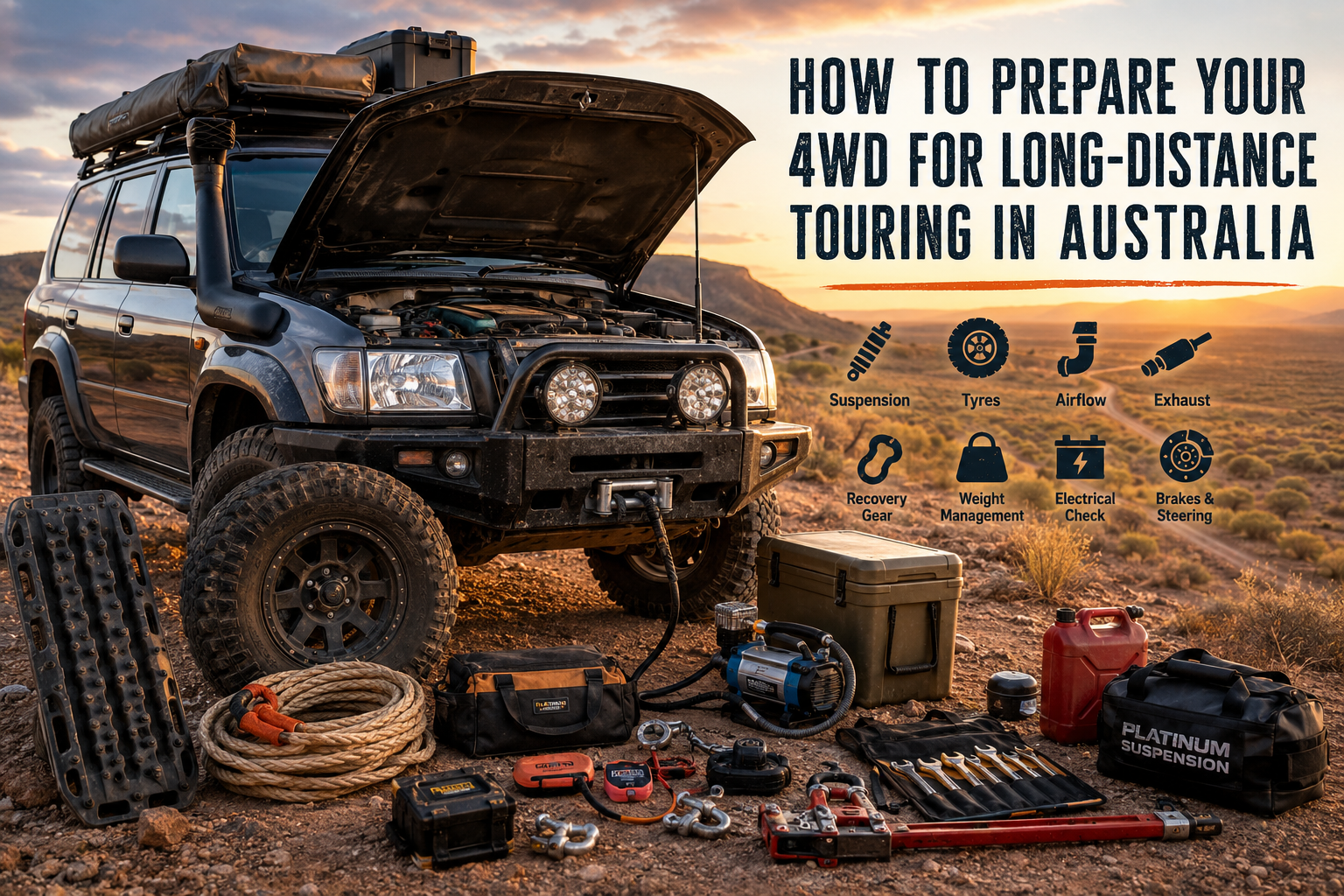
Planning a long-distance 4WD trip across Australia requires more than packing camping gear and filling the fuel tank. Remote roads, corrugations, changing weather, heavy loads and long hours behind the wheel can put significant demands on your vehicle.
A properly prepared 4WD can make the difference between an enjoyable adventure and an expensive roadside problem. From suspension and airflow to tyres, recovery equipment and engine protection, every component should be considered before heading into remote areas.
Why 4WD Preparation Matters for Touring
Australian touring routes can expose your vehicle to conditions that are very different from normal city driving. Gravel roads, corrugated tracks, sand, mud, steep climbs and water crossings can place additional stress on suspension, steering, drivetrain and engine components.
Your vehicle may also carry considerably more weight than usual. Camping equipment, recovery gear, water, fuel, spare parts, tools and luggage can quickly add hundreds of kilograms.
This additional weight affects ride height, braking, handling and suspension performance. Preparing your 4WD before the trip helps ensure it can safely handle these demands.
Check Your Suspension Before You Leave
Suspension is one of the most important areas to inspect before a long touring trip.
If your vehicle carries permanent accessories such as a bull bar, winch, canopy, drawers or long-range fuel tank, the original suspension may not be ideally matched to the additional weight.
Look for signs such as:
- Sagging at the front or rear
- Excessive bouncing
- Uneven tyre wear
- Oil leaking from shocks
- Clunking or unusual suspension noises
- Poor handling when fully loaded
- Excessive body roll
A correctly matched suspension setup can improve ride control, load support and stability across rough Australian roads.
For vehicles regularly used for touring, suspension should be selected according to the vehicle’s actual constant and temporary loads rather than simply choosing the biggest available lift.
Make Sure Your Tyres Are Ready
Your tyres are the only part of your vehicle constantly connecting with the road or track, so their condition deserves careful attention.
Before leaving, inspect the tread depth, sidewalls and overall condition of every tyre, including the spare. Check the recommended pressures for your vehicle and adjust them according to the load and terrain.
If you’re travelling through remote areas, carrying a full-size spare and the equipment required to repair a puncture can be extremely valuable.
Remember that tyre pressures suitable for sealed roads may not be ideal for every off-road environment. Always use pressures appropriate for the terrain and your vehicle manufacturer’s recommendations.
Consider Engine Airflow and Protection
Dust is one of the biggest concerns when travelling long distances on unsealed roads.
Fine dust can enter areas of the vehicle where it can cause problems if filtration and intake systems are not properly maintained. A well-designed snorkel and airbox setup can help provide the engine with cleaner air by raising the intake point away from lower areas of the engine bay.
This can be particularly useful for vehicles regularly driven through dusty environments, remote tracks and off-road conditions.
However, a snorkel should be treated as part of a properly sealed intake system rather than a guarantee that a vehicle can safely drive through any water crossing. Correct installation and inspection are essential.
Inspect Your Exhaust System
Long-distance touring can place additional demands on a modified 4WD, particularly when towing or carrying substantial loads.
Before travelling, inspect your exhaust system for loose mounts, damage, leaks or signs of corrosion. Pay particular attention to areas exposed to rocks, mud and other debris.
A quality exhaust system can also provide improved durability and airflow for appropriately configured performance vehicles. The system should, however, be selected and installed with the vehicle’s intended use and applicable Australian requirements in mind.
Don’t Forget Recovery Equipment
Even a well-prepared 4WD can become stuck or experience a mechanical issue.
Your recovery equipment should be suitable for your vehicle and the terrain you’re planning to travel through.
Depending on the trip, useful equipment can include:
- Rated recovery points
- Recovery straps
- Shackles
- Recovery boards
- Air compressor
- Tyre repair kit
- Tyre deflator
- Portable work light
- Basic tools
- Spare fuses
- Spare belts and hoses where appropriate
Recovery equipment should be inspected before the trip, and anyone travelling with you should understand how to use it safely.
Manage Your Vehicle’s Weight
One of the easiest mistakes to make when preparing a touring 4WD is adding too much equipment.
Every accessory contributes to the vehicle’s overall weight. Bull bars, winches, roof racks, awnings, drawers, fridges, water tanks and camping equipment can significantly increase the load.
Before your trip, consider what you genuinely need and remove unnecessary items.
More weight can mean:
- Increased fuel consumption
- Greater suspension load
- Longer braking distances
- Additional tyre stress
- Reduced performance
- Increased component wear
A lighter, well-organised vehicle is often more capable than an overloaded one.
Check Your Electrical System
Modern 4WD touring vehicles often rely on additional electrical equipment, including fridges, lights, communication equipment and charging systems.
Before travelling, inspect your battery condition, terminals, wiring and auxiliary power systems. Make sure connections are secure and that your electrical setup is capable of supporting the equipment you intend to use.
If your vehicle has aftermarket electrical modifications, it is worth checking them before undertaking a remote trip.
Inspect Steering and Brakes
Suspension preparation should not happen in isolation.
Steering and braking components are equally important for a safe touring setup. Check for unusual steering play, vibrations, pulling under braking or unusual noises.
Brake pads, discs, fluid levels and other components should be inspected before a major journey, particularly if your vehicle will be heavily loaded or towing.
Small problems are easier and cheaper to address at home than hundreds of kilometres from the nearest workshop.
Prepare for the Terrain
Not every Australian touring route requires the same vehicle setup.
A vehicle travelling mainly on highways and maintained gravel roads may require a different configuration from one heading into remote desert tracks or technical off-road terrain.
Think about your destination before modifying your 4WD.
For example:
Highway Touring:
Prioritise ride comfort, tyre condition, braking performance and load management.
Gravel and Corrugated Roads:
Suspension durability, shock absorber performance and correct tyre pressures become increasingly important.
Sand Driving:
Tyre management, recovery equipment and vehicle weight are particularly important.
Remote Off-Road Touring:
Consider suspension, engine protection, recovery equipment, communication and spare parts as part of a complete touring setup.
Test Your 4WD Before the Trip
Never make major modifications immediately before leaving for a long journey without testing them.
After installing suspension, snorkels, airboxes, exhaust components or other modifications, drive the vehicle locally first. Listen for unusual noises and check for rubbing, vibrations, leaks or handling changes.
If possible, load the vehicle approximately as it will be loaded during the trip and assess how it behaves.
This gives you an opportunity to identify problems before reaching remote terrain.
Build a Touring Setup Around Your Vehicle
There is no single modification package that works perfectly for every 4WD.
A Nissan Navara used as a daily driver with occasional weekend trips will have different requirements from a heavily loaded Navara travelling thousands of kilometres through remote Australia.
The same principle applies to Toyota, Ford, Isuzu, Mazda, Mitsubishi and other 4WD platforms.
Start with how you actually use the vehicle. Then choose upgrades that solve specific problems rather than adding modifications simply because they look impressive.
Get Your 4WD Ready for the Next Adventure
Long-distance touring is one of the best ways to experience Australia’s diverse landscapes, but your vehicle needs to be prepared for the journey.
A properly selected suspension system, healthy tyres, reliable airflow, suitable recovery equipment and sensible weight management can significantly improve your touring experience.
At Platinum Suspension, we specialise in 4WD suspension, snorkels, custom airboxes, exhaust systems and performance upgrades designed around demanding Australian conditions. Our Gold Coast workshop supplies and installs upgrades for popular 4WD platforms, helping owners build vehicles suited to their individual driving requirements.
Before your next long-distance adventure, assess your vehicle as a complete touring setup rather than focusing on one modification at a time. The right preparation can give you greater confidence, better control and a more reliable 4WD for the kilometres ahead.