
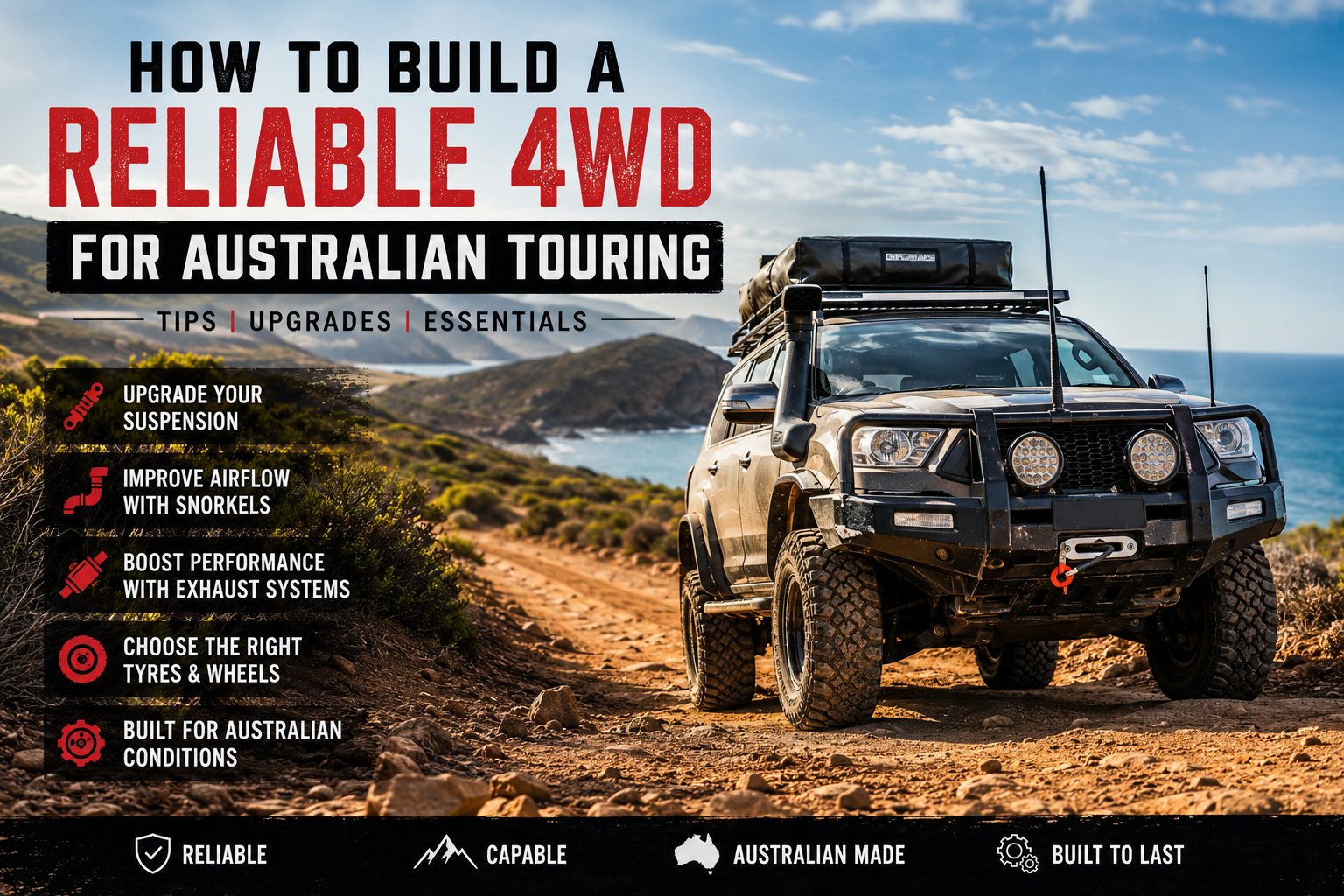
Australia offers some of the most demanding driving conditions in the world. From long outback highways and corrugated tracks to sandy beaches, rocky trails and remote camping destinations, a standard 4WD can quickly face conditions that demand more from its suspension, engine and supporting components.
Building a reliable touring 4WD is not simply about adding the biggest lift kit or installing as many accessories as possible. A well-built vehicle needs to be balanced around the way it is actually used. Suspension, airflow, exhaust, vehicle weight, tyres and recovery equipment all need to work together.
For Australian drivers planning long-distance touring or regular off-road adventures, thoughtful modifications can make the vehicle more comfortable, capable and dependable.
Start With How You Actually Use Your 4WD
Before purchasing any modification, consider how your vehicle will be used.
A 4WD used mainly for commuting with occasional camping trips needs a different setup from a vehicle that spends weeks travelling through remote areas.
Ask yourself:
- How often will the vehicle be driven off-road?
- Will you tow a caravan or trailer?
- How much permanent weight will be added?
- Will you carry camping equipment?
- Will the vehicle be used for work?
- Are you planning long-distance touring?
- Do you regularly drive on sand, rocks, mud or corrugated roads?
These questions help determine which upgrades are genuinely useful.
Adding components without considering the complete vehicle can create unnecessary weight and may negatively affect ride quality, handling and fuel consumption.
Suspension Should Be One of Your First Priorities
Suspension plays a major role in how a touring 4WD handles additional equipment and rough terrain.
Factory suspension is designed around the vehicle’s original configuration. Once you add accessories such as a bull bar, winch, canopy, roof rack, drawers, spare wheel carriers, recovery equipment and camping gear, the vehicle becomes considerably heavier.
Additional weight can contribute to:
- Rear suspension sag
- Reduced ground clearance
- Poor ride quality
- Increased body roll
- Reduced handling confidence
- Suspension bottoming
- Uneven tyre wear
A correctly matched suspension system can help the vehicle maintain appropriate ride height while improving control over uneven surfaces.
The important word is matched. Suspension should be selected according to the vehicle, constant load, occasional load, towing requirements and intended use rather than simply choosing the highest lift available.
Why Vehicle Weight Matters So Much
One of the most overlooked parts of a 4WD build is weight.
Accessories can add up quickly. A bull bar might be followed by a winch, roof rack, canopy, fridge, drawers, water tanks, recovery boards, tools, spare parts and camping equipment.
Individually, each item may seem manageable. Together, they can significantly change the vehicle’s suspension requirements.
Before upgrading your suspension, calculate the approximate permanent weight and consider the additional load the vehicle will regularly carry.
This allows suspension specialists to recommend spring rates and shock absorbers that better suit your real-world requirements.
Upgrade Your Air Intake for Dusty Conditions
Australian touring often means driving through dusty environments.
Long stretches of dirt roads can expose an engine to large quantities of fine dust. This makes air filtration and intake protection important considerations for vehicles regularly travelling off-road.
A properly designed snorkel moves the intake point higher on the vehicle and can help reduce the amount of dust and debris entering the intake system.
A snorkel can also provide additional protection during suitable water crossings, but it should never be considered a guarantee that a vehicle is waterproof. Water crossings require careful assessment of depth, conditions, vehicle configuration and manufacturer limitations.
Platinum Suspension offers custom stainless steel snorkel solutions designed around specific 4WD applications and Australian conditions.
Consider a Custom Airbox
A snorkel works as part of an overall intake system. The airbox and connections are equally important.
A properly designed airbox can help maintain a clean and controlled airflow path while providing suitable filtration and protection.
Custom airbox solutions are particularly useful when modifying a vehicle’s intake system because fitment, sealing and airflow all need to work together.
For example, Platinum Suspension offers custom airbox solutions for vehicles such as the Toyota LandCruiser and other popular 4WD platforms.
Exhaust Upgrades Can Complement a Performance Build
The exhaust system is another area that many 4WD owners consider when building a touring or performance vehicle.
A well-designed exhaust system can improve exhaust flow and complement other engine modifications. However, exhaust modifications should always be selected with the vehicle’s engine, emissions equipment, intended use and applicable Australian regulations in mind.
For diesel 4WDs, the complete setup matters more than simply installing a larger exhaust.
A balanced performance build may involve suspension, intake, intercooling and exhaust components that are selected to work together rather than treating each modification as an isolated upgrade.
Platinum Suspension manufactures and supplies a range of exhaust solutions for popular 4WD applications, including Nissan Navara and other platforms.
Don’t Choose a Lift Kit Based Only on Height
A bigger lift does not automatically mean a better 4WD.
The correct suspension height depends on your vehicle, tyre size, intended driving conditions and supporting modifications.
A touring vehicle may benefit more from improved load support, damping and ride quality than from an extreme lift.
For serious off-road applications, longer suspension travel can provide additional benefits, but the complete suspension system needs to be engineered and installed correctly.
For example, Platinum Suspension offers long-travel suspension options for the Nissan Navara D23 NP300, with components designed around increased suspension travel and off-road applications.
Think About Towing Before Choosing Suspension
If you tow a caravan, camper trailer or work trailer, your suspension requirements change.
The additional tow-ball weight places extra demand on the rear suspension. A poorly matched setup can result in excessive rear sag and changes to the vehicle’s handling characteristics.
A suspension upgrade should therefore take towing into account from the beginning.
Tell your suspension specialist:
- Your typical trailer weight
- Approximate tow-ball weight
- How frequently you tow
- Whether the vehicle also carries additional cargo
- Whether the vehicle is used for long-distance touring
This information helps create a setup that is better suited to your actual driving conditions.
Tyres and Suspension Need to Work Together
Suspension is only one part of an off-road build.
Tyres influence traction, ground clearance, ride comfort and how the vehicle responds to different surfaces.
A suspension upgrade combined with inappropriate tyres may not deliver the results you expect.
Your tyre selection should reflect where you drive. A vehicle used mainly on highways with occasional dirt-road trips may benefit from a different tyre choice than a vehicle regularly driven through mud, sand and rocky terrain.
Correct tyre pressures are also important, particularly when moving between sealed roads and off-road surfaces.
Protect the Vehicle From Australia’s Harsh Conditions
Australian touring can expose vehicles to heat, dust, vibration and long periods of continuous driving.
This makes quality components and proper installation especially important.
Before a major trip, inspect:
- Suspension bushes
- Shock absorbers
- Springs
- Steering components
- Brake lines
- Wheel bearings
- Tyres
- Intake connections
- Exhaust mounts
- Recovery equipment
Small problems are much easier to address at home than hundreds of kilometres from the nearest town.
Avoid Building Your 4WD All at Once
Another common mistake is trying to complete an entire build in one weekend.
Instead, consider upgrading the vehicle in stages.
Start with the modifications that solve your biggest problems.
For example, if your vehicle is constantly carrying additional weight, suspension may be the priority. If you regularly travel through dusty remote areas, intake protection may become more important.
Once the basic setup is working correctly, you can add supporting modifications.
This approach makes it easier to understand how each upgrade affects the vehicle.
Choose Components Designed for Your Vehicle
Modern 4WDs have different suspension geometries, engine configurations, weights and electronic systems.
A component that works well on one vehicle may not be suitable for another.
This is particularly important when modifying popular platforms such as the Nissan Navara, Toyota Hilux, LandCruiser, Prado, Mitsubishi Triton, Volkswagen Amarok and other 4WDs.
Vehicle-specific fitment can improve installation quality and reduce the risk of mismatched components. Platinum Suspension’s range includes suspension, snorkels, airboxes and performance upgrades for several popular 4WD platforms.
Professional Installation Makes a Difference
Even high-quality components can perform poorly if they are incorrectly installed.
Suspension components need to be fitted correctly, fasteners need appropriate attention and supporting components may need adjustment after installation.
Wheel alignment should also be considered after relevant suspension modifications.
For custom-fabricated components such as snorkels and exhaust systems, proper fitment and sealing are equally important.
A professional workshop can assess the vehicle as a complete package instead of simply installing individual parts.
Build for Reliability, Not Just Appearance
A good 4WD build should look impressive, but appearance should not be the primary objective.
The best touring vehicles are designed around reliability and usability.
Every modification should answer a simple question:
Does this make the vehicle better suited to the way I actually drive?
If the answer is yes, the modification may be worthwhile.
If an accessory adds substantial weight without providing a meaningful benefit, it may be worth reconsidering.
Final Thoughts
Building a reliable 4WD for Australian touring is about creating a balanced vehicle rather than simply adding more modifications.
Suspension should account for additional weight. Intake systems should suit dusty conditions. Exhaust upgrades should complement the vehicle’s overall performance setup. Tyres should match the terrain, while towing requirements and long-distance travel should influence the entire build.
The most effective 4WD modifications are those selected around real-world use.
Whether you’re preparing a Nissan Navara for touring, upgrading a Toyota for off-road adventures or building a capable work and recreational vehicle, the right combination of suspension, fabrication and performance upgrades can make a significant difference.
Platinum Suspension specialises in 4WD suspension, custom snorkels, exhaust systems, airboxes and performance upgrades from its Gold Coast workshop, with solutions designed for Australian conditions.
If you’re planning your next 4WD build, start by understanding what your vehicle needs rather than simply choosing the biggest modification available. A properly planned setup can deliver better comfort, control, durability and confidence wherever the road takes you.